
Nana Heleng’s Pancit Estacion: The Original Pancit Estacion of Tanza, Cavite Open Since 1934!
Disclosure: Some of the links below are affiliate links. At no additional cost to you, we will earn a small commission when you make a purchase. This commission will help us create more content and maintain this website. Don’t worry because we will only recommend products and services that we believe in.
Pancit is a Filipino stir-fried noodle dish. It is usually served in Filipino eateries and restaurants, during family occasions, and even corporate gatherings. It has regional varieties, and is usually named after the kind of noodles used (Bihon or Canton) or the place of its origin (e.g. Cabagan or Malabon).
In this article, I’ll be featuring the origin of Pancit Estacion—Nana Heleng’s Pancit Estacion.
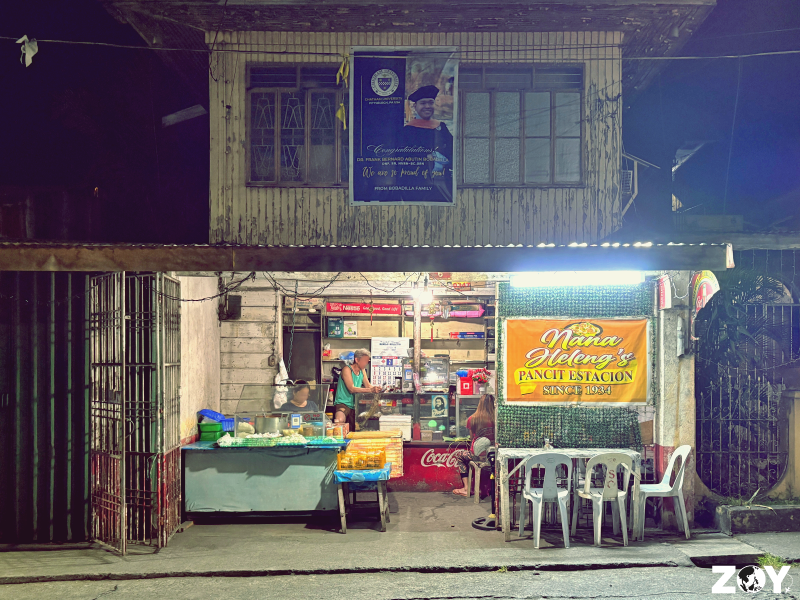
Nana Heleng’s Pancit Estacion
My wife and I were once driving along CAVITEX way past midnight when I suddenly thought of going to Nana Heleng’s Pancit Estacion, which opens at 3AM! So we decided to do a spontaneous food trip to Tanza, Cavite.
The luglugan (luglog spot) is an institution in Tanza, founded in 1934. It’s founded by Nana Heleng and is now run by his son, Johnny Bobadilla, who is super friendly. He engages in conversations, telling the story of Nana Heleng’s Pancit Estacion.
Nana Heleng’s is popular for its namesake pancit estacion. This dish is interesting for two reasons. First, it was originally sold in a train station; hence the name. Second, it’s similar to the Pancit Luglug of Pampanga, which has an orange-colored, shrimp-based sauce. But instead of using the typical thick rice noodles, pancit estacion uses toge or mung bean sprouts, which was born out of necessity when noodles were scarce.
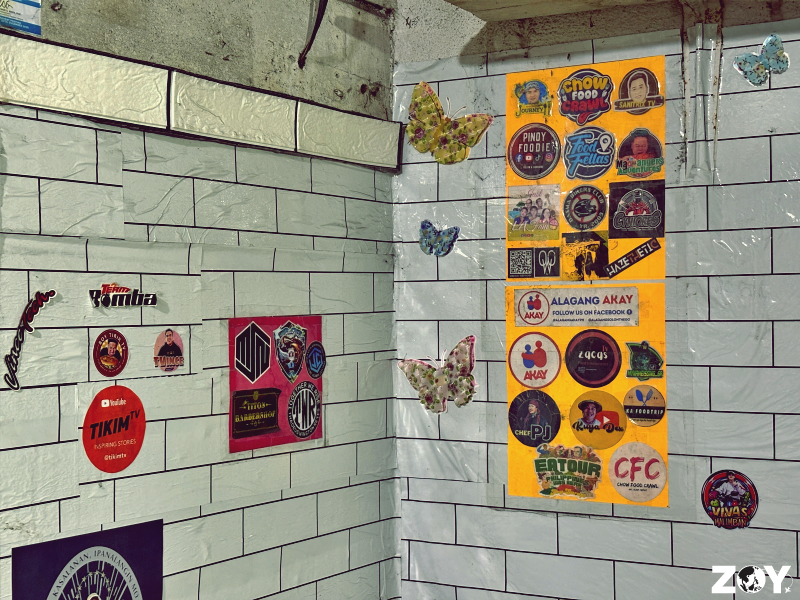
Many content creators have already featured Nana Heleng’s
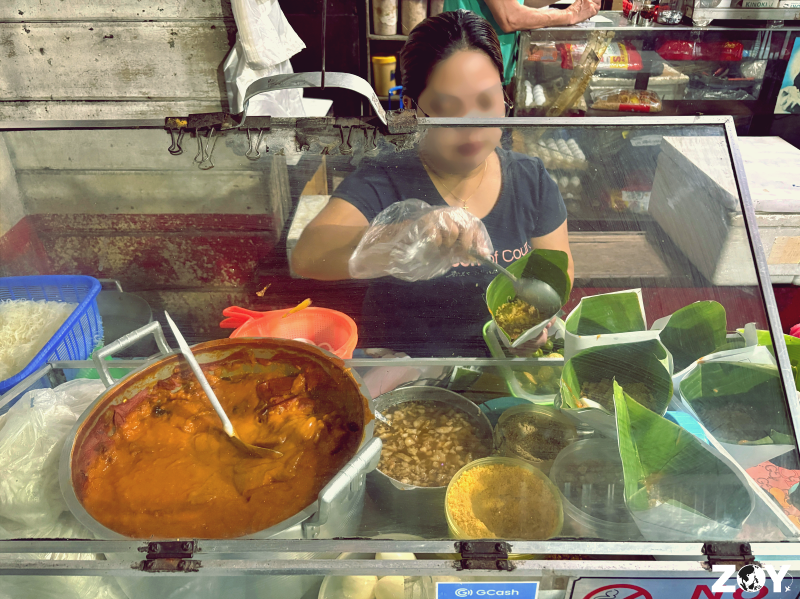
Our Pancit Estacion Being Prepared
But in Nana Heleng’s, you have three noodle options: Soft “taba” (thick rice noodles), springy “payat” (thin rice noodles), or crisp toge. You also have the option of combining them all!
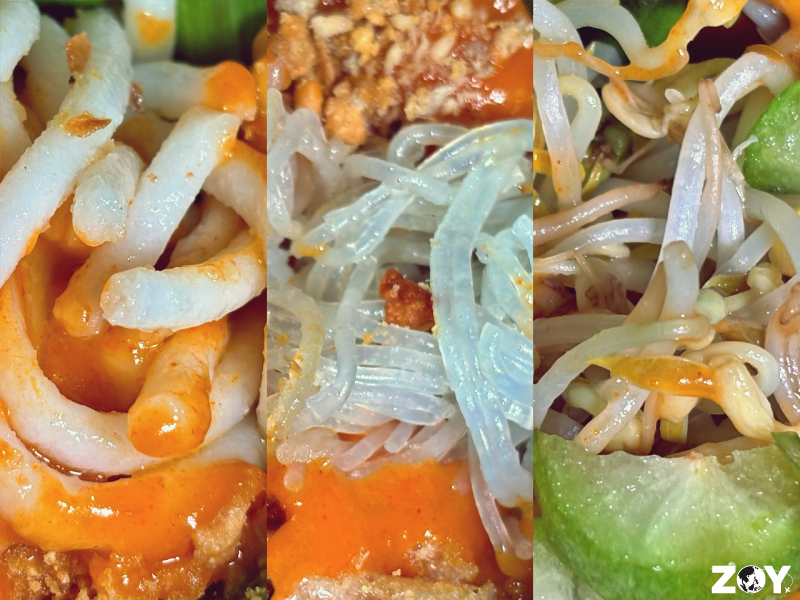
Left to Right: Taba, Payat, and Toge
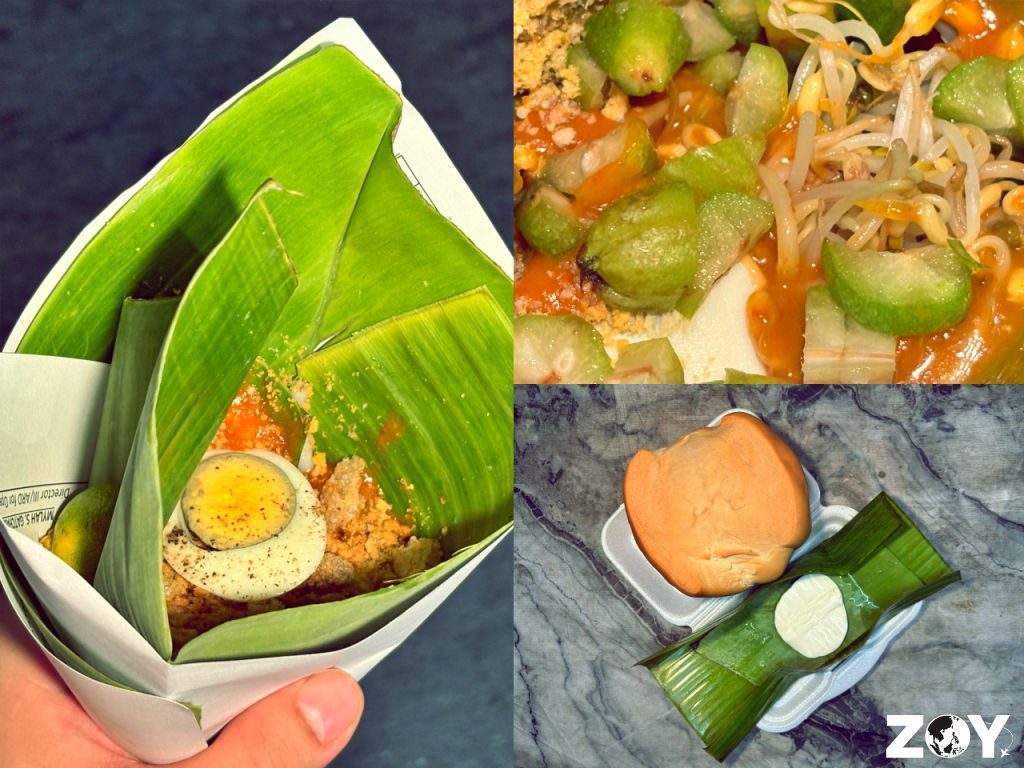
I like that the pancit are placed in a cone-shaped banana leaves. Now that’s sustainability!
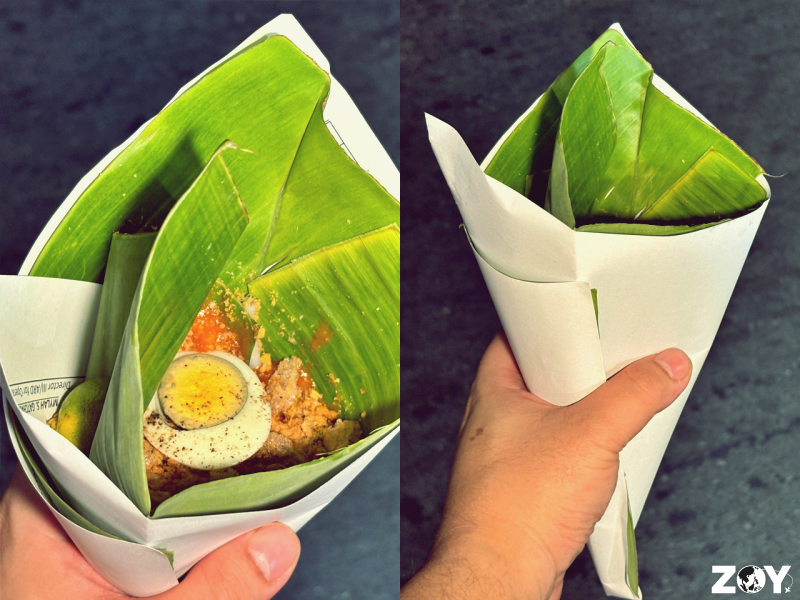
The pancit are placed in a cone-shaped banana leaves
Intermission: Are you planning a trip to the Philippines soon? Can’t decide what activities to do yet? Then check out the activities in Klook!
The noodles are covered with an orange-colored sauce that has a shrimpy aroma and taste. Then it’s topped with chicharon (deep-fried pork rinds), fish crackers, tinapa (smoked fish), and a special concoction that has chicharon bulaklak (ruffled fat or pig mesentery). So imagine the flavors and textures!
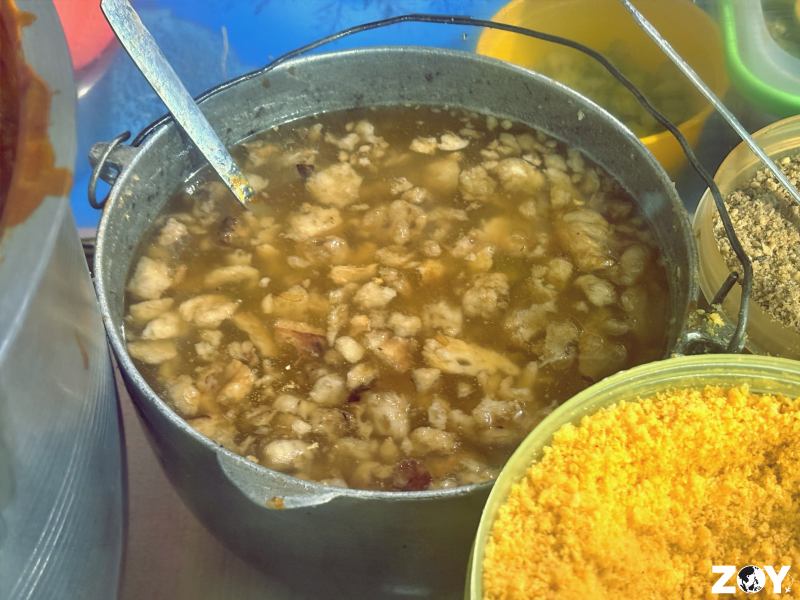
The Special Concoction
Honestly, the pancit is on the salty side so it needs a squeeze of calamansi.
If you order the toge, they also add kamias or bilimbi, which is a crisp, sour fruit. I’m just not sure if you can add it to taba or payat.
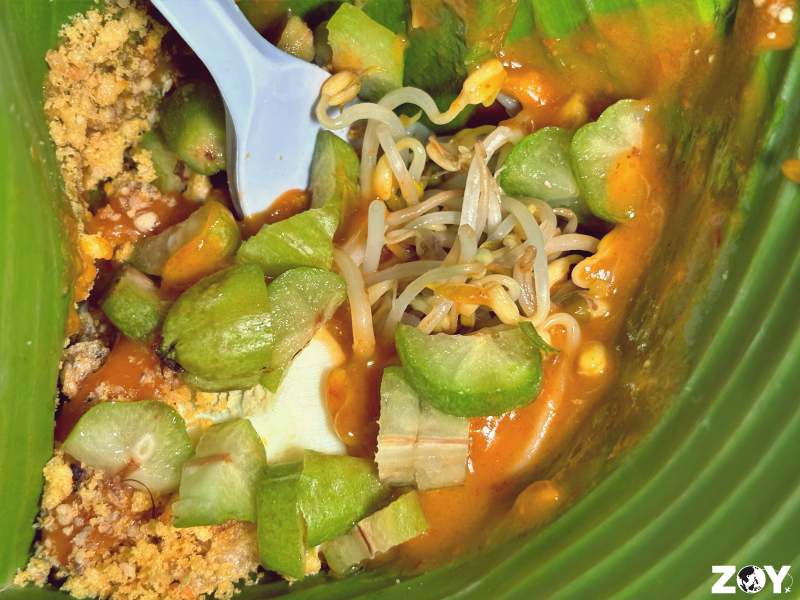
Pancit Estacion with Kamias
Pancit estacion is usually paired with Pan de Rasyon (a.k.a. Monay), which is a bread that’s soft and dense, and Kasilyo/Kesong Puti (white unaged cheese made with unskimmed carabao’s milk), which is salty and creamy.
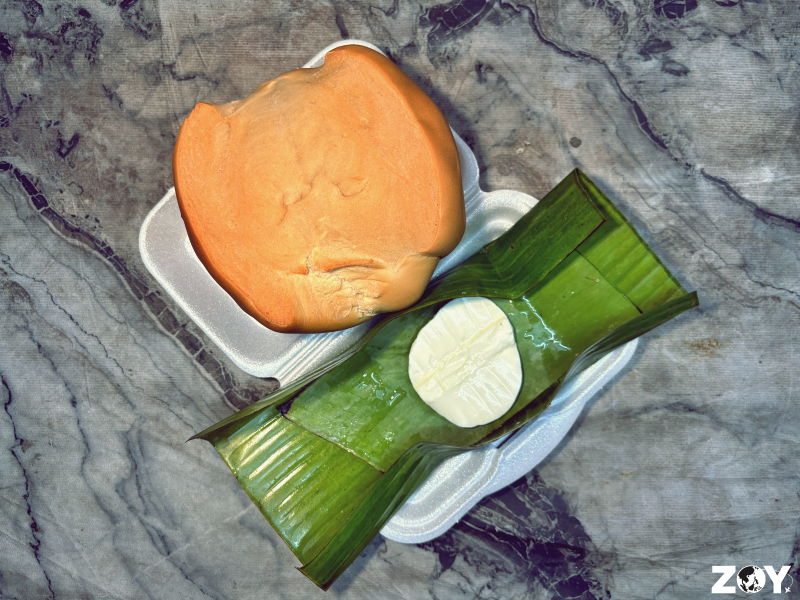
Pan de Rasyon and Kasilyo
Nana Heleng’s also sells barbecue and empanadas:
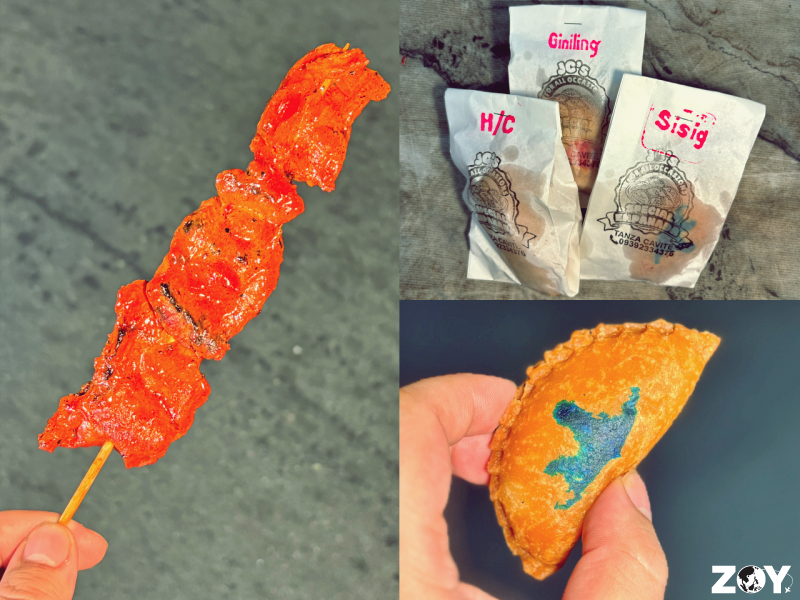
Left to Right: Pork Barbecue and Empanadas
Nana Heleng’s Pancit Estacion makes good pancit estacion and luglug. But honestly, I’m not a big fan of its sauce because it’s shrimpy (I’m allergic to shrimp but I can tolerate it). So if you love pancit with a strong shrimp flavor, I think you’ll love it and I recommend that you pay it a visit.
Nana Heleng’s Pancit Estacion
Address: 6 Hugo C. Arce, Tanza, Cavite, Philippines | Operating Hours: Tuesday-Sunday, 3AM-10AM
Don’t forget to book your activities at Klook!